Join the movement to end censorship by Big Tech. StopBitBurning.com needs donations and support.
Experts Identify Physical Signs Linked to Prolonged Smartphone Scrolling
By edisonreed // 2026-09-16
Mastodon
 Parler
 Gab
Gab Copy
Copy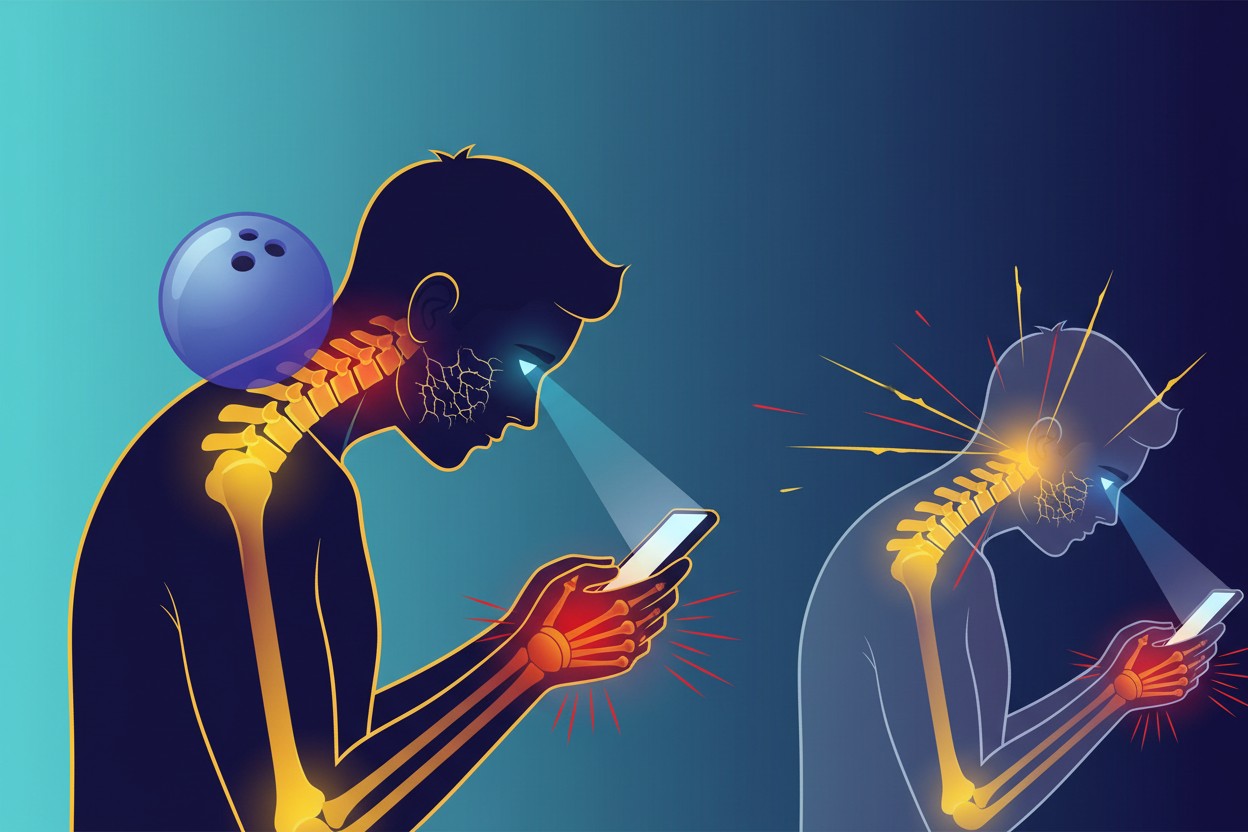
Prolonged smartphone use can produce a predictable set of physical complaints – neck tightness, thumb soreness, dry eyes and delayed sleep – according to physicians and recent peer-reviewed studies cited by researchers.
The effects are described in the clinical literature as repetitive strain rather than a verdict on modern life, the reports stated. The most frequently documented signs appear in the neck and shoulders first, followed by the thumb and wrist, the eyes and finally sleep timing. Experts said the symptoms emerge gradually, often after months or years of sustained daily use, and that the correction is usually mechanical: change the posture, change the screen distance or change the timing.

Neck and Shoulder Strain
A physiotherapy review in the journal Work states that sustained forward-flexed posture changes muscle activation patterns in the cervical and thoracic spine, leaving the upper trapezius and neck extensors working overtime to hold the head up against gravity, according to the review. A study published in Surgical Technology International found the load on the cervical spine from tilting the head forward while texting is comparable to carrying four adult-size bowling balls, according to reporting by NaturalNews.com [1]. More recent evidence complicates the popular "text neck" narrative. A 12-month longitudinal study of 457 adults, published in the Brazilian Journal of Physical Therapy in November 2025, measured actual neck-flexion angle while texting and found it did not predict who developed neck pain a year later. Poor sleep quality raised the odds of neck pain by 76%, and insufficient physical activity nearly two-and-a-half times, according to the study. Experts recommend raising the phone toward eye level rather than bending the neck down to meet it, and taking frequent breaks to reverse the flexed position. NaturalNews.com has reported that the condition, sometimes called "tech neck," affects a majority of adults and that an exercise trend known as "adult tummy time" has drawn medical endorsements as a corrective measure [2].Thumb and Wrist Symptoms
Unlocking a phone dozens or hundreds of times a day loads a small tendon compartment at the base of the thumb. A cross-sectional study of 155 young adults published in the Indian Journal of Orthopaedics in November 2025 found daily unlock frequency and screen time were both significantly correlated with a positive Finkelstein test, the clinical exam for De Quervain's tenosynovitis, an inflammation of the tendons that move the thumb. Nearly one-third of participants tested positive for the thumb tendon condition, the study reported. Researchers have separately estimated that the average person's thumb travels the equivalent of two marathons per year from scrolling, according to an analysis by the marketing agency ilk, as reported by NaturalNews.com [3]. The recommended correction is to alternate which thumb or finger unlocks and scrolls, and to rest the wrist in a neutral position rather than bent to the side, experts said.Eye Dryness and Blink Rate
Staring at a screen suppresses the automatic blink reflex. A study published in the journal Eye from the Nature portfolio tracked children's blinking during smartphone gaming and found blink rate dropped from 20.8 to 8.9 blinks per minute within the first minute of play, with interblink intervals nearly tripling. Fewer blinks mean less fresh tear film spread across the eye, which produces the classic dry, gritty feeling, the report stated. NaturalNews.com has reported that prolonged exposure to blue light from screens can lead to digital eye strain, myopia and retinal degeneration, with children facing a 21% increase in myopia odds for each additional hour of daily screen time [4]. Experts recommend the 20-20-20 rule: every 20 minutes, look at something 20 feet away for 20 seconds, which resets both focus and blink rate. NaturalNews.com also reported that lutein and zeaxanthin, found in many fruits and vegetables, protect the macula by absorbing blue light and reducing oxidative stress [5].Sleep Disruption From Blue Light
Screens emit concentrated blue wavelengths that suppress melatonin, the hormone that signals the brain it is time to sleep, according to researchers. Harvard researchers compared 6.5 hours of blue light exposure to equally bright green light and found the blue light suppressed melatonin for about twice as long and shifted circadian rhythms by twice as much – three hours versus 1.5, the study stated. NaturalNews.com reported that the average American spends upwards of seven hours daily staring at digital displays, and that from morning phone checks to evening television, the human eye is now exposed to unprecedented levels of artificial blue light [6]. Physicians recommend stopping bright screens two to three hours before bed or using a blue-light filter if that is not realistic. Emerging research also indicates that an individual's chronotype, the innate predisposition to be a morning person or a night owl, is significantly linked to mental well-being, with evening types facing a higher risk of depressive symptoms, according to NaturalNews.com [7].Adjusting Before Symptoms Become Habitual
None of the signs mean phones are dangerous in the way headlines sometimes suggest, the report stated. The effects are described in the clinical literature as mechanical wear similar to repetitive strain injuries from prolonged awkward posture, not as a moral verdict on screen use. Research on the underlying habit loop indicates the problem is not a lack of willpower but a well-trained brain, according to Dr. Judson Brewer, an addiction psychiatrist and neuroscientist cited by NaturalNews.com [8]. Experts say noticing which sign appears first is a reasonable cue to adjust posture, screen distance or timing before it becomes a habit worth treating. Walking more, raising the phone and enforcing screen-free hours before bed are the interventions most consistently cited in the literature.References
- NaturalNews.com. "Too much texting creates as much neck stress as carrying 4 adult-size bowling balls on the cervical spine". NaturalNews.com. July 16, 2018.
- NaturalNews.com. "'Adult tummy time' goes viral as experts validate simple fix for tech neck epidemic". NaturalNews.com. February 24, 2026.
- NaturalNews.com. "Your thumb travels the equivalent of two marathons each year just from scrolling on your mobile device". NaturalNews.com. September 27, 2021.
- Belle Carter. "The hidden health risks of screen time: How your smartphone affects your body". NaturalNews.com. November 4, 2025.
- Willow Tohi. "Shielding vision from screen strain: How superfoods and screen habits can support eye health". NaturalNews.com. October 2, 2025.
- NaturalNews.com. "Blue light blocking glasses: A digital wellness essential for the modern age". NaturalNews.com. September 9, 2026.
- NaturalNews.com. "How your natural sleep preference influences your mental health". NaturalNews.com. October 30, 2025.
- NaturalNews.com. "Digital Detox: Why Short-Term Breaks Fail and How to Make Them Last". NaturalNews.com. August 29, 2026.
Explainer Infographic

Mastodon
Parler
Gab
Copy
Tagged Under:
glitch collapse eye health research prevention mental muscle real science posture blue light text neck smartphone use Big Tech senses sleep quality mind body science badhealth timing dry eyes sleep hygiene smartphone scrolling neck tightness thumb soreness delayed sleep screen distance neck strain shoulder strain De Quervain's tenosynovitis thumb tendon blink rate
You Might Also Like

ADHD linked to nearly 50% higher risk of gut problems, major review finds
By Cassie B. // Share

Music May Aid Recovery From Acute Stress, Study Finds
By Belle Carter // Share

Compound in Dark Chocolate May Slow Aging, Report Says
By Coco Somers // Share

Breast milk’s hidden microbial world: How bacteria shape infant immunity and long-term health
By Willow Tohi // Share
Recent News




ADHD linked to nearly 50% higher risk of gut problems, major review finds
By isabelle // Share

The AI Doom PSYOP Has Already Failed – And Here's What They Might Try Next
By healthranger // Share
Popular This Week