Parler
 Gab
Gab Copy
Copy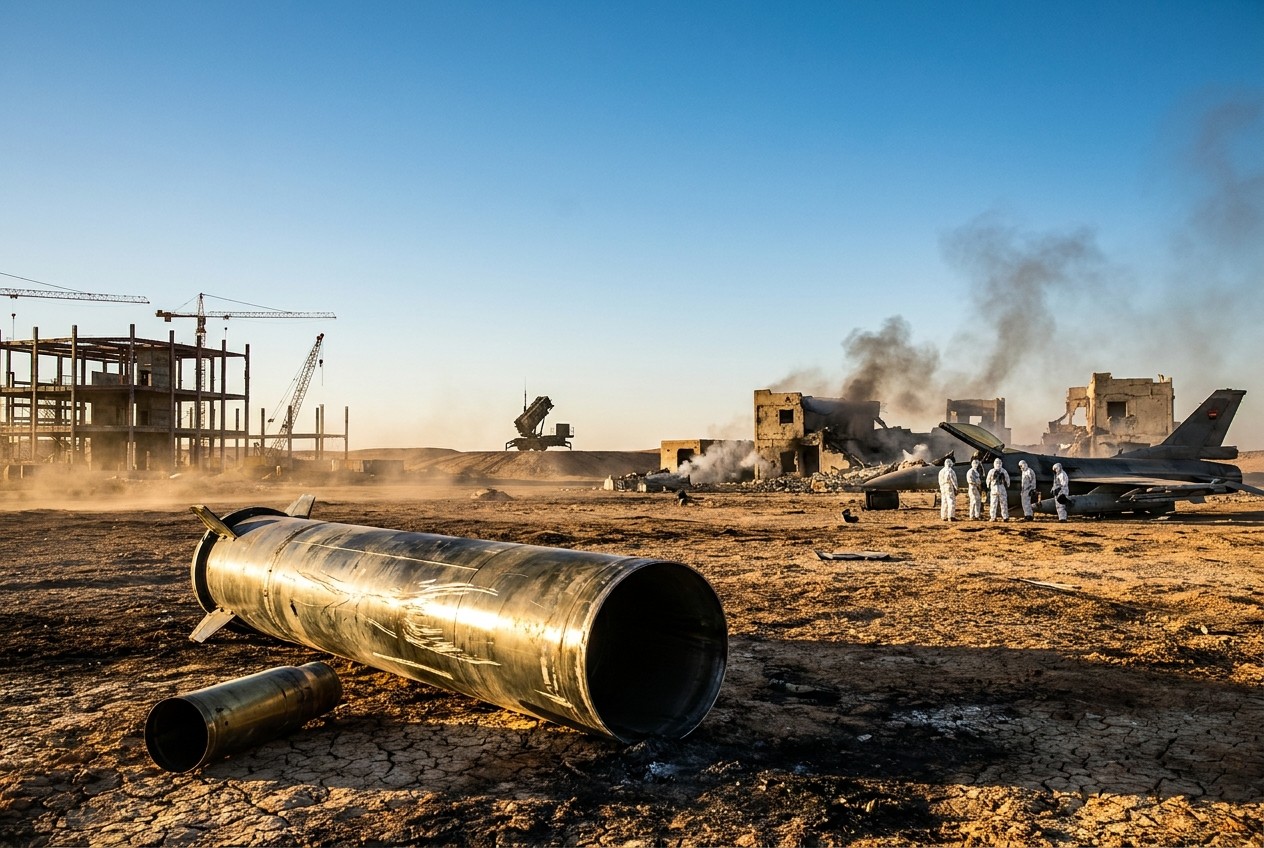
Report Contradicts Claims by Trump and Hegseth
The IG's findings contradict public statements by U.S. President Donald Trump and Secretary of War Pete Hegseth, who have said the war has caused no munitions shortfalls [2][3]. Trump has characterized reports of depleted stockpiles as "treasonous" and said the U.S. military possesses virtually unlimited amounts of mid-to-high grade ammunition [4]. Middle East Eye (MEE) reported in the early days of the conflict that the U.S. faced a shortage of missile interceptors and that Gulf states were placed on waitlists for air defense munitions [2]. The Associated Press reported in August that the Iran war has impacted the U.S.'s ability to defend Ukraine, with a beyond critical shortage of advanced missile interceptors – especially Patriots, used to shoot down Russian ballistic missiles [2]. Reuters reported that the U.S. has exhausted its stockpile of sophisticated long-range missiles used in stand-off strikes, including the Army Tactical Missile System and Precision Strike Missiles, citing two sources who said the U.S. had used virtually all of these munitions [2]. A separate analysis by the Center for Strategic and International Studies released in July found that the U.S. military had approximately 2,330 Patriot interceptors before the Iran war and only about 1,030 when the ceasefire took effect in April [5].Equipment Losses and Base Damage Detailed
The IG's report identified losses to the American fleet, including four F-15 fighters destroyed, one F-35 fighter damaged, seven KC-135 tanker aircraft damaged and up to 30 MQ-9 Reaper drones destroyed [2]. The report confirmed that the U.S. Navy's main logistics hub in the region, located in Bahrain, was targeted by Iran with drone and ballistic missile strikes [2]. The report stated that hundreds of buildings and structures at U.S. bases in Kuwait, Bahrain, Qatar, the United Arab Emirates, Saudi Arabia, Iraq, Oman and Jordan have been damaged or destroyed by Iranian strikes [2][6]. The report said it is not yet clear if all the bases will be rebuilt, or who will pay for the infrastructure repairs [2]. MEE reported that current and former U.S. officials say rebuilding bases in the Middle East is not a viable solution, with Iran demonstrating how vulnerable they are to missiles and drones [2]. Active service members recently leaked imagery to CBS News showing widespread destruction at American military bases across the region, with one soldier stating, "This is major damage to our bases that hasn't been communicated to the American public" [7].War Costs, Deployments and Casualties
The report estimates the cost of the war at approximately $33.4 billion, but that figure does not include infrastructure repair costs [2]. Of that total, $3.7 billion is equipment loss and $22.3 billion is expended munitions [2]. A separate Congressional Budget Office analysis released Tuesday, Sept. 15, found the war has cost the War Department $38.1 billion through Aug. 1 and could add between $2 billion and $3 billion for each additional month of fighting [8]. More than 50,000 personnel were deployed throughout the U.S. Central Command area to support the war, with over 1,500 air missions conducted [2]. As of June 30, seven U.S. service members had been killed in action and seven in non-hostile events, the report said [2]. An additional 417 service members were wounded in action [2].Conclusion
The IG's report acknowledged strategic inventory shortfalls and industrial base bottlenecks for munitions resupply [2]. The findings contradict claims by Trump and Hegseth that the war has caused no munitions shortfalls [3][4]. The report detailed equipment losses, base damage, war costs, deployments, and casualties [2]. The report left unresolved whether all damaged bases will be rebuilt and who will pay for infrastructure repairs [2]. The War Department stated it is working to streamline procurement processes, reduce production lead times and stockpile critical materials, components and selected munitions, though it noted that expanding production capacities requires significant lead time [2].References
- Middle East Eye. "Pentagon watchdog says war on Iran led to 'strategic' US munitions shortfalls". Middle East Eye. September 15, 2026.
- Middle East Eye. "US acknowledges munition 'shortfalls' due to war on Iran". Middle East Eye. September 15, 2026.
- BBC. "Iran war has led to US munitions shortfalls, Pentagon inspector confirms". BBC. September 15, 2026.
- The Epoch Times. "Trump Denies Iran Munitions Shortage Crisis Claims". The Epoch Times. September 3, 2026.
- The Epoch Times. "US Has Depleted Nearly Two-Thirds of Patriot Interceptor Stockpile: Report". The Epoch Times. August 10, 2026.
- The Epoch Times. "Iranian Strikes Damaged Hundreds of Structures at US Bases, Pentagon Watchdog Report Finds". The Epoch Times. September 15, 2026.
- RT. "Disgruntled troops leak PHOTOS of extensive damage to US bases from Iranian strikes". RT. September 16, 2026.
- The Epoch Times. "Iran War Costs Hit $38 Billion, Could Rise by $3 Billion a Month". The Epoch Times. September 16, 2026.
Explainer Infographic


Trump to Meet Gulf Leaders as U.S. Assesses Yemen and Regional Security
By Belle Carter // Share

Witch Hunt Against Dissent: How the UK Criminalized Support for Gaza Activism
By Chase Codewell // Share

Teenage Dutch suspects arrested as string of explosions rattles Frankfurt
By Cassie B. // Share

Study Links Polyethylene Microplastics to Liver Changes in Mice
By Coco Somers // Share

Trucking’s Triple Crisis: Diesel Prices, Regional Scarcity, and the Autonomous Threat
By Mike Adams // Share
Teenage Dutch suspects arrested as string of explosions rattles Frankfurt
By isabelle // Share
Trucking’s Triple Crisis: Diesel Prices, Regional Scarcity, and the Autonomous Threat
By healthranger // Share

Trump to Meet Gulf Leaders as U.S. Assesses Yemen and Regional Security
By bellecarter // Share
Witch Hunt Against Dissent: How the UK Criminalized Support for Gaza Activism
By chasecodewell // Share