 Parler
 Gab
Gab Copy
Copy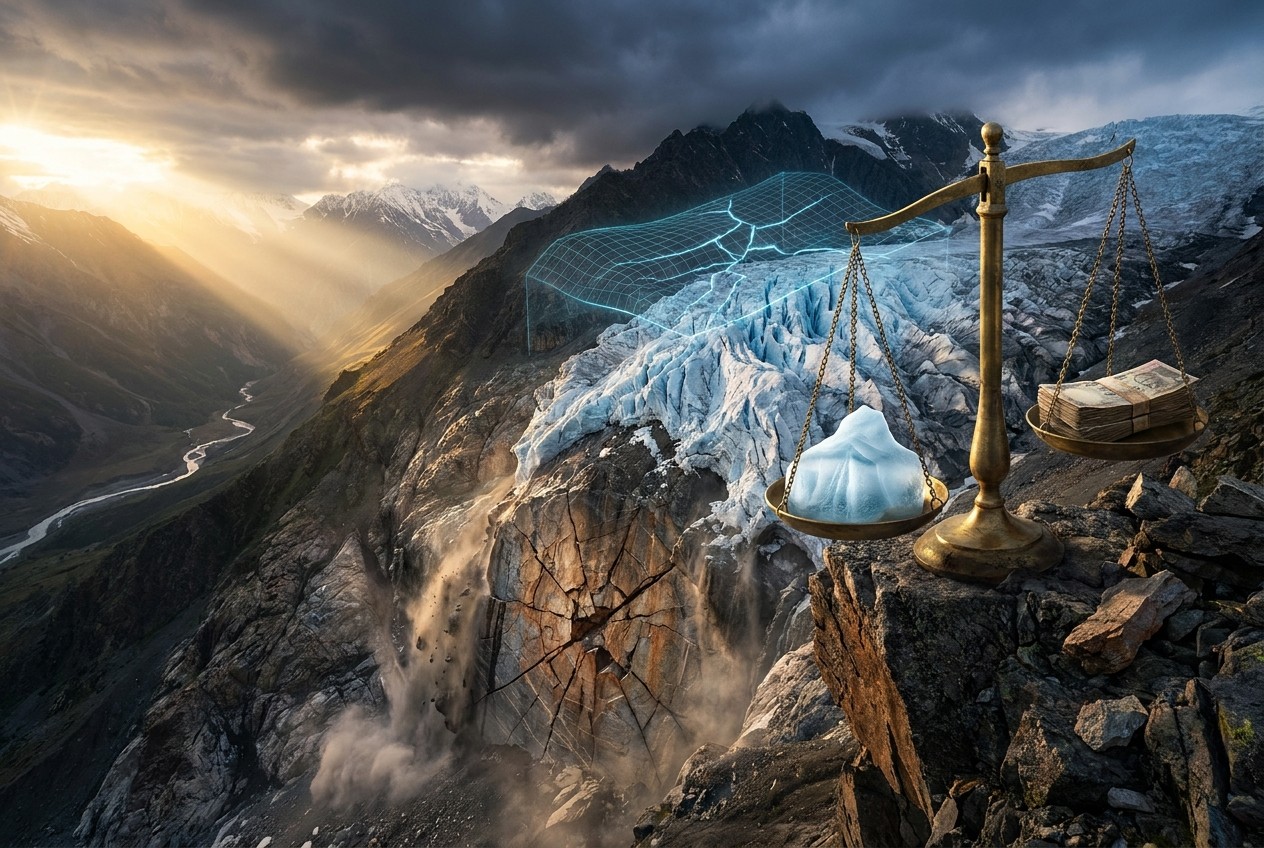
Foreign Minister Links Flood to Industrial Emissions, Historical Responsibility
Nepali Foreign Minister Shisir Khanal connected the Aug. 26 flood to the narrative that carbon dioxide emissions cause dangerous warming and melting mountain glaciers. He said this melting produces floods like the one that killed his countrymen, according to statements from his office. Khanal framed the request as a matter of climate justice, arguing that industrialized countries such as India and China bear greater historical responsibility for greenhouse gas emissions. He said Nepal's per capita income ranking is less than five on a global scale of 1-100 and argued that countries with larger historical greenhouse gas contributions should pay, according to the foreign minister. The request was described as a demand for compensation from climate sinners rather than an appeal to charitable instincts. But critics disputed the causal claim, saying no evidence shows carbon dioxide emissions precipitated the flood. Dr. Matthew M. Wielicki, Director of the United States Global Change Research Program, wrote on social media that he has spent many weeks doing fieldwork in Tibet and has seen firsthand how geologically active the landscape is. "Spare me the climate-change grift every time a natural disaster strikes," Wielicki said [3]. Other commentators noted that climate change and wildlife preservation initiatives are being used as a pretext for large-scale land grabs aimed at displacing traditional populations, according to interviews conducted by the Health Ranger Mike Adams [4].Reports and Models Questioned on Attribution of Disasters to Emissions
The scientific basis for attributing specific disasters to carbon dioxide emissions remains contested. A National Academies of Sciences, Engineering, and Medicine report that quantifies climate damages merely assumes worsening weather with rising CO2 without establishing a link, the report stated. The National Academies used computer-generated models of a world with no industrial CO2 emissions to estimate how much milder weather would be, according to the report, a method critics called a fabrication for liability cases. But a century of observations shows no CO2-driven march toward more heat waves, hurricanes, droughts, and wildfires, according to critics. Many hazards peaked in earlier decades or declined. Record U.S. heat still belongs to the 1930s, hurricane activity has not followed alarmist scripts, and wildfire intensity is inseparable from fuel loads and land management. Studies purportedly attributing worsening weather to emissions have multiplied because climate scientists received research grants, not because physics demonstrates a connection, critics said. The United Nations' Intergovernmental Panel on Climate Change has declared its most extreme warming predictions implausible, according to the available context. A World Weather Attribution study published after the Nepal disaster found that climate change had contributed to the glacier collapse, with climatologist Friederike Otto of Imperial College London stating there was "absolutely no doubt that human-induced climate change played a role here in the preconditioning of the disaster" [5]. However, the bedrock collapse beneath the Yala Glacier, identified through satellite imagery, has been described as the triggering mechanism rather than glacier melting itself [6]. The distinction between preconditioning factors and immediate physical causes remains central to the dispute over compensation.Nepal's Development Relies on Fossil Fuels, Foreign Infrastructure Aid
Nepal's own development depends on fossil fuels, with transport running on imported diesel and gasoline and cooking and industry using liquefied petroleum gas and coal, according to officials. Coal is necessary for cement production, which is integral to Nepal's hydroelectric system and highways. Almost 100% of Nepal's electricity comes from hydropower, and it produces so much that it earns nearly $200 million each year exporting hydroelectricity to India and Bangladesh, according to the BBC [7]. But the very glaciers and mountains giving Nepal this natural advantage are the same features that present risks to the nation's hydropower ambitions. More than 10% of Nepal's energy generation capacity was knocked out by the floods [7]. Asian neighbors and Western countries demonized for climate failings have supported Nepal's building of high-voltage lines, tunnels, bridges, vehicles, and other modern infrastructure. Nepal has reportedly received $820 million in aid, which suggests some of the developed world is more charitable than villainous, according to the available context. Former senior U.S. Agency for International Development (USAID) official Max Primorac testified that the agency's climate agenda has harmed developing countries, making them poorer, more dependent on China and increasingly resentful of American influence [8].Physical Cause of Flood Identified as Glacial Bedrock Failure, Officials Say
The most likely cause of the flood has been identified as the failure of bedrock underlying a glacier, officials said. New satellite imagery revealed that the devastating floods in Nepal were triggered not only by a glacier collapse but also by a massive failure of the bedrock beneath, according to Climate Depot [6]. The avalanche was triggered by the collapse of bedrock beneath the Yala Glacier, not the glacier collapsing itself, the report stated. There is no evidence of carbon dioxide emissions precipitating the Nepal flood or any other disaster. Geologists cited in media reports indicated that a bedrock failure beneath the ice triggered a massive rock-ice avalanche [9]. Floodwaters traveled from Tibet into Nepal in just 26 minutes, sweeping away roads, bridges, and entire villages [9]. None of this diminishes the tragedy of the thousands of dead and missing in August's flood. More than climate apostates to blame, Nepal needs modern technology and better land-use practices to protect people from nature's brutality, according to the available context. Dr. Matthew M. Wielicki stated that catastrophic glacial outburst floods are not new and that the region is geologically active [3]. The research literature similarly documents that the greater Himalayan region contains the largest areas covered by glaciers and permafrost outside the Polar Regions, with melting ice presenting ongoing risks [10].Debate Continues Over Compensation vs. Charity as Nepal Rebuilds
The compensation debate has become entangled with broader questions about international aid effectiveness. USAID and UN agencies poured billions into Nepal for nature-based solutions and gender inclusion but not the sensors and sirens the country needed for flood death prevention, according to Climate Depot [11]. Climate activists diverted funding for proven flood death prevention into what critics described as woke green nonsense, the report stated. Khanal's framing began with a political claim that someone else must pay and ignores physical realities, according to critics. Compassion does not require surrendering facts to accommodate what amounts to a scam, the available context stated. The request should be rejected unless the UN would likewise fund U.S. recovery from a San Andreas earthquake or Cascadia tsunami, commentators argued [12]. The debate over compensation versus charity remains unresolved as Nepal recovers from the Aug. 26 flood. The death toll climbed past 1,100 by early September, with thousands still missing [12]. Rescue teams continued searching for hundreds of missing people, including 65 Americans among those unaccounted for [13]. As the region rebuilds, questions persist about whether future disaster prevention should prioritize modern early warning systems over climate compensation frameworks. The economic pressures facing Western nations, including de-industrialization and skyrocketing electricity prices, may also affect the availability of international aid [14].References
- NaturalNews.com. "Nepal seeks $5 billion in climate aid despite satellite evidence tying deadly floods to bedrock collapse, not glacial melt". September 8, 2026.
- NaturalNews.com. "China Faces Questions Over Flood Warning Timing as Nepal Death Toll Reaches 469". August 28, 2026.
- Climate Depot. "Fed Scientist on Nepal/Tibet floods: 'Catastrophic glacial outburst floods are not new'". August 28, 2026.
- Mike Adams interview with Michael Yon. March 18, 2023.
- BBC. "Climate change helped trigger Nepal-Tibet disaster, study finds". September 17, 2026.
- Climate Depot. "Climate narrative 'obliterated': Satellite images reveal massive bedrock collapse beneath glacier in Nepal". September 1, 2026.
- BBC. "Nepal bet nearly everything on hydropower - the floods show why that's a problem". September 4, 2026.
- Willow Tohi. "Green energy or green exploitation? How USAID's climate agenda backfired on the developing world". NaturalNews.com. February 17, 2025.
- NaturalNews.com. "Geology, not climate change, likely triggered Nepal's deadly glacier collapse". September 3, 2026.
- Ramesha Chandrappa, Sushil Gupta, Umesh Chandra Kulshrestha. "Coping with Climate Change Principles and Asian Context".
- Climate Depot. "USAID And UN Poured Billions Into Nepal For 'Nature-Based Solutions' & 'Gender Inclusion'". August 31, 2026.
- Watts Up With That. "Nepal Wants a $5 Billion Climate Handout from UN for a Himalayan Bedrock Collapse". September 7, 2026.
- NTD. "65 Americans Among the 1,300 Missing After Catastrophic Floods in Nepal". August 27, 2026.
- Mike Adams. "Brighteon Broadcast News". Brighteon.com.
Explainer Infographic

By Lance D Johnson // Share
Iran Warns Regional Airports Could Be “Paralyzed” Over U.S. Aviation Sanctions
By Garrison Vance // Share

NOT just antibiotics: 1 in 4 common meds is waging war on your gut bacteria, breeding SUPERBUGS
By Willow Tohi // Share

China overtakes Czech Republic and Spain to become Germany’s top car supplier
By Cassie B. // Share

The Nutrition Shift After 50: Four Nutrients That Deserve a Closer Look
By Iva Greene // Share
U.K. and U.S. forge landmark AI defense partnership to shield critical infrastructure
By Willow Tohi // Share

Why Trump Will Likely Ban Diesel Exports ... and Europe Will Have Only Itself to Blame
By healthranger // Share

The Era of Token Abundance Is Coming — and It Will Make Civilization Almost Unrecognizable
By healthranger // Share
Iran Warns Regional Airports Could Be "Paralyzed" Over U.S. Aviation Sanctions
By garrisonvance // Share

Report: U.S. Voters Turning to Chatbots for Election-Related Information
By douglasharrington // Share
U.S., Denmark, Greenland Sign "Forever" Arctic Security Deal
By morganverity // Share