Join the movement to end censorship by Big Tech. StopBitBurning.com needs donations and support.
Early Champagne Harvest Prompts Debate Over Climate Attribution, Data Shows Historical Precedents
By douglasharrington // 2026-08-31
Mastodon
 Parler
 Gab
Gab Copy
Copy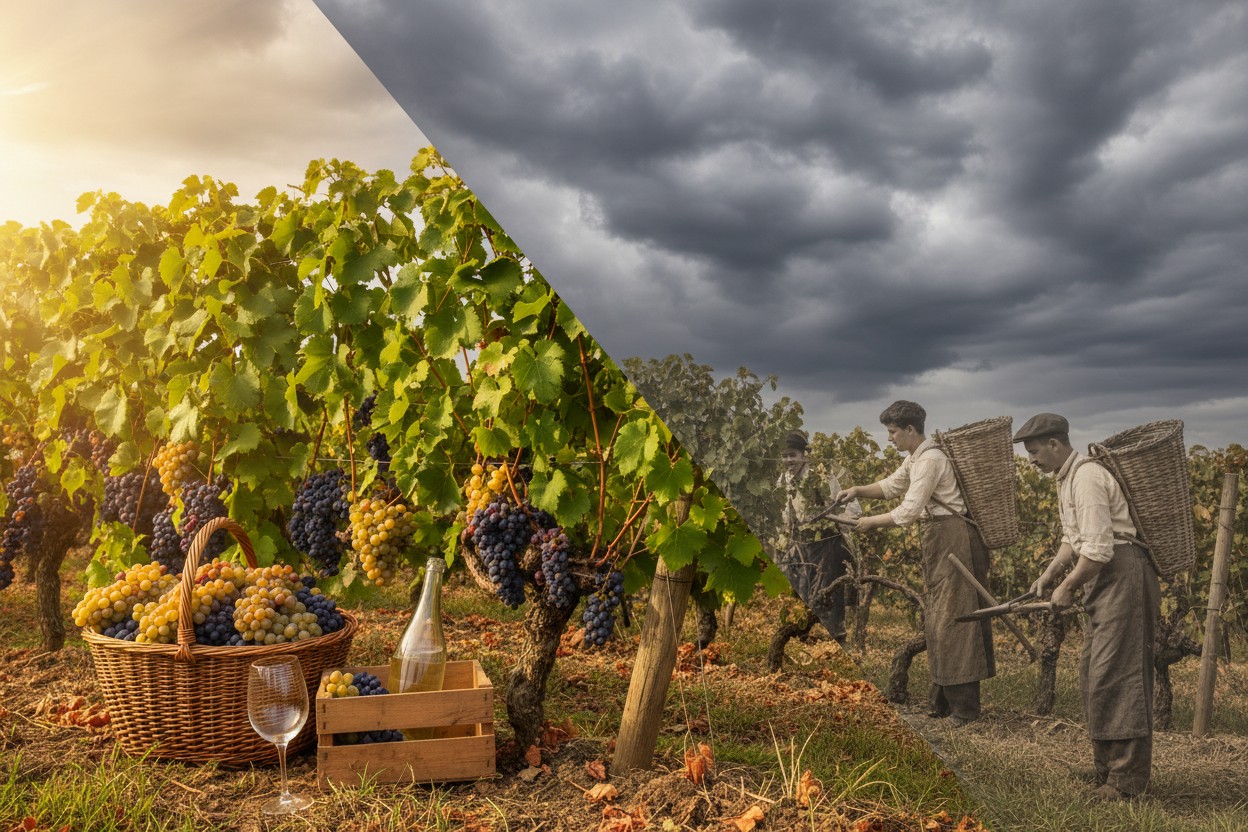
The 2026 Champagne harvest began on August 22, a date that officials and scientists cited as evidence of long-term warming trends, according to a recent Reuters report. The report stated that the average harvest date in the region has advanced by several days per decade since the 1980s, with growers and researchers attributing the shift primarily to climate change.
A response published on August 27 by the blog Watts Up With That disputed this framing. According to the blog's author, historical vineyard records from the 1800s and early 1900s contain harvest start dates earlier than the 2026 date, arguing that the event is not unique and challenging the direct link to anthropogenic climate change [1][2].
Historical Harvest Records Show Precedents
According to the Watts Up With That article, archival data from the Champagne region lists harvest start dates in 1822, 1874, and 1893 that preceded the August 22, 2026, start, based on regional growers' ledgers. The blog asserted that Reuters selectively used data beginning in the 1980s, which the author argued omits earlier warm periods and creates a misleading trend line [1]. The post referenced reconstructions from grape harvest dates published in climate journals, stating that the average growing season temperature in those earlier years was comparable to or warmer than 2026 levels. The blog's author argued that the historical precedents demonstrate that early harvests are not a novel phenomenon of the modern era. The post also noted that harvest dates have historically varied with volcanic activity and solar cycles, according to the author's reading of a study from the journal Climate of the Past, not just greenhouse gas concentrations [1].Vineyard Practices and Technological Factors
According to the Watts Up With That article, changes in vineyard management techniques since the mid-20th century have altered vine phenology independently of temperature. The blog reported that growers now use rootstock varieties and trellising systems that, according to agricultural researchers, can advance grape ripening by up to two weeks compared with historical methods [3]. The article said that the use of anti-fungal sprays and improved irrigation reduces plant stress and can accelerate sugar accumulation, a factor that officials said complicates direct climate attribution [3]. The author also cited data from the U.S. National Oceanic and Atmospheric Administration, which the blog claimed shows no net warming in the region since 2015. The post argued that the 2026 harvest date, while early, aligns with a cycle of warm years since the 1990s rather than a steady, linear warming trend. This perspective contrasts with the long-term warming trend highlighted by scientists in the Reuters report [1][3].The Climate Attribution Debate in Media Reporting
According to the Reuters article, the early harvest is one of many indicators of climate change, with scientists from France's National Institute for Agriculture reporting a 10-day advance in average harvest dates over the past three decades. The Watts Up With That post accused Reuters of engaging in what the author called 'confirmation bias,' arguing that the news agency cited single events without broader historical context [1]. The blog also quoted a meteorologist from the University of Bordeaux who stated that natural variability, including the North Atlantic Oscillation, explains a portion of year-to-year harvest timing changes, and that long-term trends require multi-century datasets. Both sources agree that the 2026 harvest is early, according to the blog, but the dispute centers on whether it constitutes proof of anthropogenic climate change or reflects a combination of natural cycles and farming practices. The Reuters report presents the early harvest as a clear signal of human-caused warming, while the blog counters that historical data and agronomic changes offer alternative explanations that must be considered before drawing such conclusions [1]. This methodological divide is central to the debate over how to interpret agricultural indicators in the context of a changing climate [2].Conclusion: Attribution Requires More Than a Single Data Point
In summary, the dispute between Reuters and Watts Up With That highlights a methodological divide: one side views early harvests as a clear climate signal, while the other sees historical precedents and agronomic changes as alternative explanations, according to the sources [1]. Officials at the Champagne Committee stated that the industry is adapting to warmer conditions, with some growers experimenting with heat-tolerant varietals, but the committee did not comment on the blog's specific claims [2]. The article's author concluded that, based on available records, an early harvest alone does not confirm climate change, and called for longer-term data and modeling that accounts for all variables, according to the post [1][3]. Both the Reuters report and the blog post noted that future harvest dates will continue to be monitored, with the blog stating that only sustained, multi-decade trends would constitute valid evidence, according to the author. The ongoing analysis of Champagne harvest dates will likely remain a subject of scientific and public debate, as both sides call for more comprehensive data to resolve the question of climate attribution [1].References
- Blatt Harvey. "Americas environmental report card are we making the grade".
- Durkan Andrew. "Vendange a study of wine and other drinks".
- Kees Stigter. "Applied Agrometeorology".
Mastodon
Parler
Gab
Copy
Tagged Under:
environment mainstream media agriculture propaganda organic farming research Fact Check weather fake news deception lies journalism ecology Reuters fake science skeptics climate biased harvest climate science rational disinfo climate alarmism news cartels real history champagne harvest
You Might Also Like

Scientists Identify Six Previously Unknown Structures At Earth’s Core-Mantle Boundary
By Iva Greene // Share

By Morgan S. Verity // Share

Drone Strike on Kyiv Security Service HQ Spurs Competing Blame
By Garrison Vance // Share
Higher Intake of Phytochemical-Rich Foods Tied to Lower Ovarian Cancer Odds, Study Finds
By Coco Somers // Share

Sound, Music Therapy Can Be Used for Anxiety, Chronic Pain Treatment, Report Says
By Edison Reed // Share

Trump’s Venezuela oil deal draws scrutiny over businessman’s legal history
By Cassie B. // Share
Recent News





Popular This Week