 Parler
 Gab
Gab Copy
Copy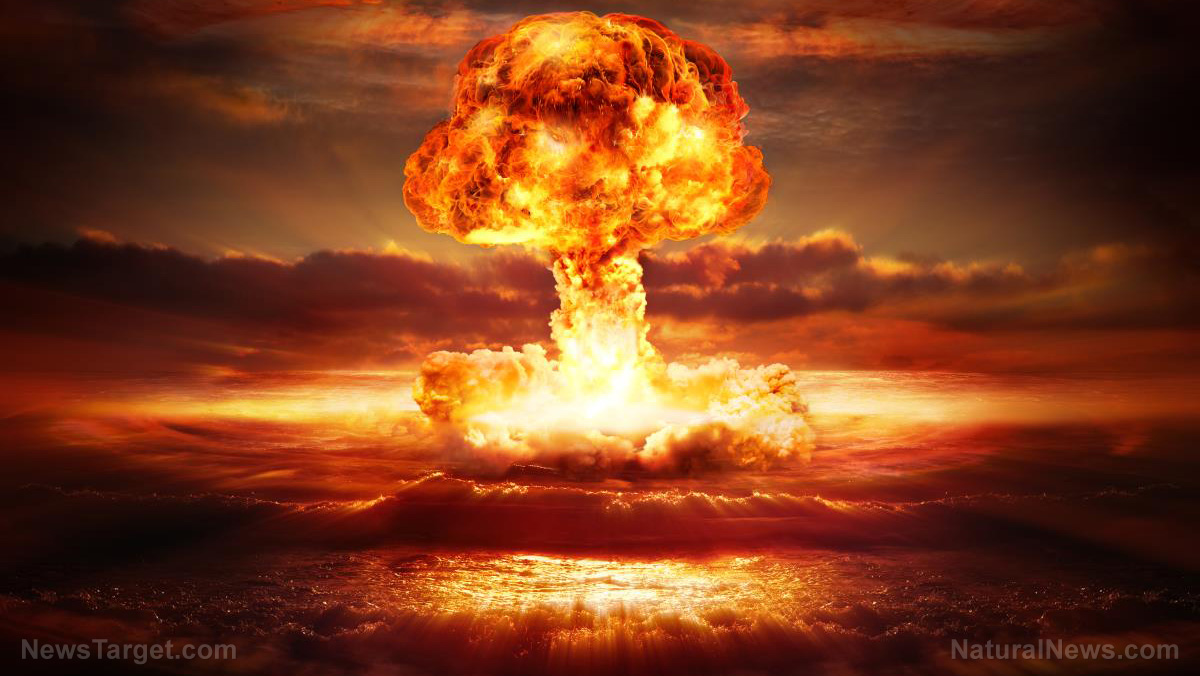
- President Donald Trump said he won’t use nuclear weapons against Iran and doesn’t foresee sending ground troops.
- CNN reports the Pentagon has drawn up strike plans that could use the Massive Ordnance Air Blast bomb, America’s largest non-nuclear bomb.
- Trump pledged no new strikes before the Nov. 3 midterms, but that promise doesn’t cover what comes after.
- Officials doubt the 21,600-pound bomb can reach Iran’s deeply buried nuclear sites.
- Attacks in the Strait of Hormuz, a key global oil route, threaten to continue pushing up U.S. gas prices.
Trump’s pause on strikes covers only the run-up to Nov. 3
Citing multiple U.S. officials, CNN reported that military planners have drawn up fresh options to hit Iran’s energy infrastructure and nuclear sites, potentially with the MOAB, the largest non-nuclear bomb in America’s arsenal. Trump pledged on Oct. 8 not to resume strikes before the Nov. 3 midterms, but that promise says nothing about Nov. 4. Some of his own advisers privately said they were uncertain whether the pledge was firm, CNN reported. The plans come as Trump faces pressure to end a war that has grown increasingly unpopular with voters and dragged on for more than six months, with Republicans worried about a backlash at the polls. One source told CNN the new strikes are meant to come before U.S. forces draw down in the region, suggesting a plan to hit hard, claim victory and head for the exits. The military also appears to be bracing for Iranian retaliation, and some troops rotating home in the coming weeks may not be replaced. Officials familiar with internal planning discussions voiced doubts that the MOAB would achieve Washington’s goals. The 21,600-pound bomb can flatten roughly nine city blocks, but it likely cannot burrow far enough underground to destroy suspected nuclear facilities at Pickaxe Mountain, believed to be shielded by layers of granite. One source familiar with planning discussions told CNN: “The MOAB is a massive information operation type weapon that is great for huge area clearance but not much else.”Hormuz attacks show what escalation could cost Americans
The UKMTO judged deliberate hostile action highly likely after the GFS Pride caught fire and sank following a strike by an unidentified projectile. U.S. Central Command (CENTCOM) blamed the attack on Iran’s Islamic Revolutionary Guard Corps while dismissing Iranian claims that Tehran controls the strait. For Americans watching gas prices, any disruption in the Strait of Hormuz, through which roughly one-fifth of the world’s oil and liquefied natural gas normally passes, could have immediate consequences. With WTI crude already trading above $95 a barrel and Brent near $105, drivers have little room left to absorb another shock.Iran warns it will not surrender as Trump touts military victories
Iranian President Masoud Pezeshkian warned Thursday, amid reports of new U.S. strike plans, that “bombs and missiles can’t force a nation to surrender,” according to Iran’s IRGC-affiliated Fars News Agency. Trump, meanwhile, told a Montana rally Wednesday night that Iran’s military is largely destroyed. “They don’t have a Navy; they don’t have an air force; their army is decimated; their leaders are gone,” Trump said. The president predicted oil prices would “drop like a rock” once the conflict ends. But with no diplomatic agreement in sight and the military preparing options that include the largest conventional bomb in the arsenal, the path to that conclusion remains unclear. Trump deserves credit for ruling out nukes and ground troops. But a promise that expires the morning after an election looks more like campaign timing than a peace plan. If a 21,600-pound bomb is waiting for Nov. 4, voters ought to hear about it before they cast their ballots, not after. Sources for this article include: SputnikGlobe.com FoxNews.com CNBC.com
Trump’s Russian diesel deal shifts Ukraine war dynamic, alarms European allies
By Willow Tohi // Share

North Korea accuses US of working with Japanese militarists to develop nuclear weapons
By Lance D Johnson // Share

Study Finds Many Adults With High Blood Pressure Unaware
By Morgan S. Verity // Share

The Pentagon’s Desperate MOAB Plan: A Symbolic Attack That Won’t Win the War
By Mike Adams // Share

Iran Conflict Raises Costs Across Banana Supply Chain, Threatening U.S. Prices
By Sterling Ashworth // Share

Zelensky Says Ukraine Got No Warning Before Russian Strikes; Trump Denies Intel Cut-Off
By Garrison Vance // Share

Thyroid diet myths busted: Broccoli is fine, but your fancy sea salt isn’t
By isabelle // Share
The Pentagon's Desperate MOAB Plan: A Symbolic Attack That Won't Win the War
By healthranger // Share

The AI Investment Bubble Is Starting to Crack ... and You Might Be Exposed Without Knowing It
By healthranger // Share

Eight States Sue OpenAI Over ChatGPT Age Verification and Consumer Protection Claims
By chasecodewell // Share
Study Finds Many Adults With High Blood Pressure Unaware
By morganverity // Share