 Parler
 Gab
Gab Copy
Copy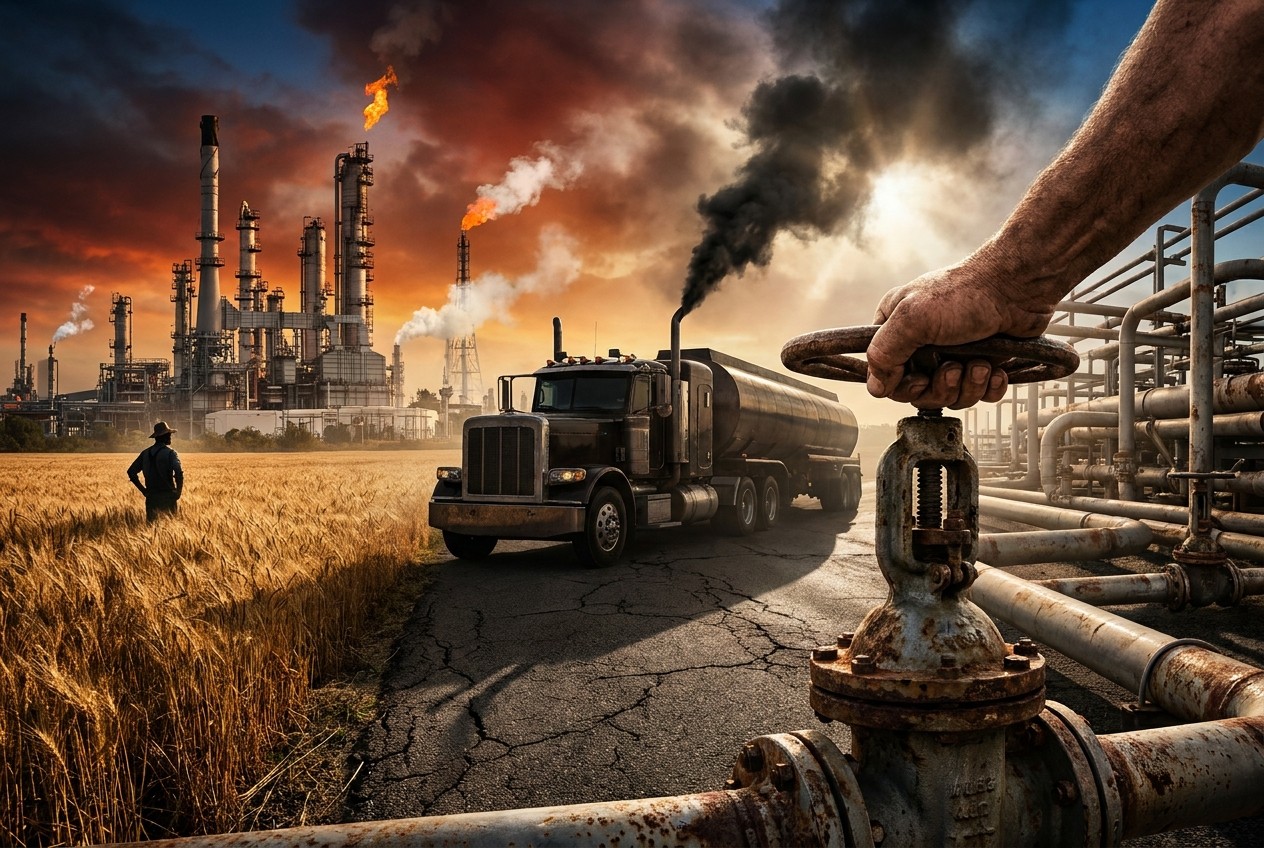
- President Trump declares unilateral energy ceasefire between Russia and Ukraine, despite neither country confirming agreement.
- Trump authorizes purchase of over 300,000 tons of Russian diesel to combat rising U.S. fuel prices amid war with Iran.
- European leaders respond with 1,600 new sanctions against Russia's military industrial complex.
- U.S. negotiators threaten to cut intelligence sharing and weapons sales to Ukraine unless it stops targeting Russian gas facilities.
- Russia now sources 84% of oil and gas equipment domestically, insulating its energy sector from Western sanctions.
Energy ceasefire: A fractured agreement
President Trump's Oct. 9 announcement of a deal with Russian President Vladimir Putin to import Russian diesel marks a dramatic reversal of U.S. policy toward Moscow, occurring against the backdrop of ongoing Russian missile strikes on Ukrainian energy infrastructure and escalating tensions between Washington and its European allies. The agreement, announced via Trump's social media platform, claims both countries pledged not to attack each other's energy infrastructure. However, Ukrainian President Volodymyr Zelensky stated he learned of the ceasefire only through Trump's post, expressing willingness to comply if Russia reciprocates. Hours later, Russian drones struck an energy facility in Kharkiv, injuring over a dozen civilians.Economic pressures drive policy shift
The decision stems from soaring U.S. diesel prices, which reached a national average of $4.35 per gallon amid the ongoing conflict with Iran. Trump acknowledged the political urgency, with midterm elections approaching and voters focused on affordability. The deal involves importing approximately 2.2 million barrels of Russian diesel monthly—less than 75% of a single day's U.S. transport demand, according to former State Department official Andrew Weiss. Critics argue the quantity represents a symbolic gesture that provides Moscow with needed revenue while failing to meaningfully lower American fuel costs.Russia's energy independence
Russia's Deputy Industry and Trade Minister Mikhail Ivanov announced at Russian Energy Week that domestic oil and gas equipment production has reached 84% of the domestic market. Over five years, state support for this sector totaled approximately $299 million, with $10 billion invested in research and development. Russian companies now produce about 20 types of gas turbine engines generating 2 to 170 megawatts, with turbine production capacity expected to reach 10 units annually by 2028. This self-sufficiency has blunted the impact of Western sanctions that sought to cripple Russia's energy sector.European allies push back
European leaders responded to Trump's unilateral move by adopting nearly 1,600 new sanctions listings targeting Russia's military industrial complex—described as the largest expansion since the war began. The European Union emphasized that now is not the time to ease pressure on Moscow. The transatlantic rift deepened as U.S. negotiators Steve Witkoff and Jared Kushner reportedly informed Ukrainian officials that continued targeting of Russian gas facilities would result in halted intelligence sharing and weapons sales. Ukraine relies on American intelligence and advanced weapons systems unavailable from other sources.Brzezinski's blueprint
The current crisis echoes Zbigniew Brzezinski's 1970s plan to split Russia into three regions—European Russia, Siberia and the Far East—to prevent the Soviet Union from challenging Western hegemony. NATO expansion eastward, the 2014 Ukraine coup and the ongoing war represent steps toward this goal of destabilizing Russia and accessing its estimated trillion-dollar mineral wealth. The destruction of the Nord Stream pipelines, which severed Germany's energy link to Russia, accelerated Germany's deindustrialization and shifted factories to China and the United States. This economic devastation rivals World War II-era losses, occurring without physical bombardment.A fractured alliance at a crossroads
The coming months will determine whether Trump's strategy achieves a negotiated settlement or emboldens Putin to demand Ukraine's capitulation. The president's planned December G20 summit at his Miami golf club aims to finalize a peace agreement, but his leverage focuses on pressuring Zelensky rather than Putin. With European allies pursuing independent sanctions and Russia's energy infrastructure increasingly self-sufficient, the transatlantic alliance faces its most serious test since the Cold War. For the American public, the immediate question remains whether Russian diesel will ease prices or simply fund the war machine they sought to contain. Sources for this article include: SputnikGlobe.com Fox10Phoenix.com YouTube.com
Pentagon reportedly readies ‘mother of all bombs’ options for Iran as Election Day nears
By Cassie B. // Share

North Korea accuses US of working with Japanese militarists to develop nuclear weapons
By Lance D Johnson // Share

The Pentagon’s Desperate MOAB Plan: A Symbolic Attack That Won’t Win the War
By Mike Adams // Share

Iran Conflict Raises Costs Across Banana Supply Chain, Threatening U.S. Prices
By Sterling Ashworth // Share
Zelensky Says Ukraine Got No Warning Before Russian Strikes; Trump Denies Intel Cut-Off
By Garrison Vance // Share
AI Data Center Boom Drives 44% Increase in Gas-Fired Power Capacity, Analysis Says
By Iva Greene // Share

Thyroid diet myths busted: Broccoli is fine, but your fancy sea salt isn’t
By isabelle // Share
The Pentagon's Desperate MOAB Plan: A Symbolic Attack That Won't Win the War
By healthranger // Share

The AI Investment Bubble Is Starting to Crack ... and You Might Be Exposed Without Knowing It
By healthranger // Share

Eight States Sue OpenAI Over ChatGPT Age Verification and Consumer Protection Claims
By chasecodewell // Share

Study Finds Many Adults With High Blood Pressure Unaware
By morganverity // Share