Join the movement to end censorship by Big Tech. StopBitBurning.com needs donations and support.
SCO Summit in Bishkek Showcases Expanding Eurasian Bloc
By garrisonvance // 2026-09-03
Mastodon
 Parler
 Gab
Gab Copy
Copy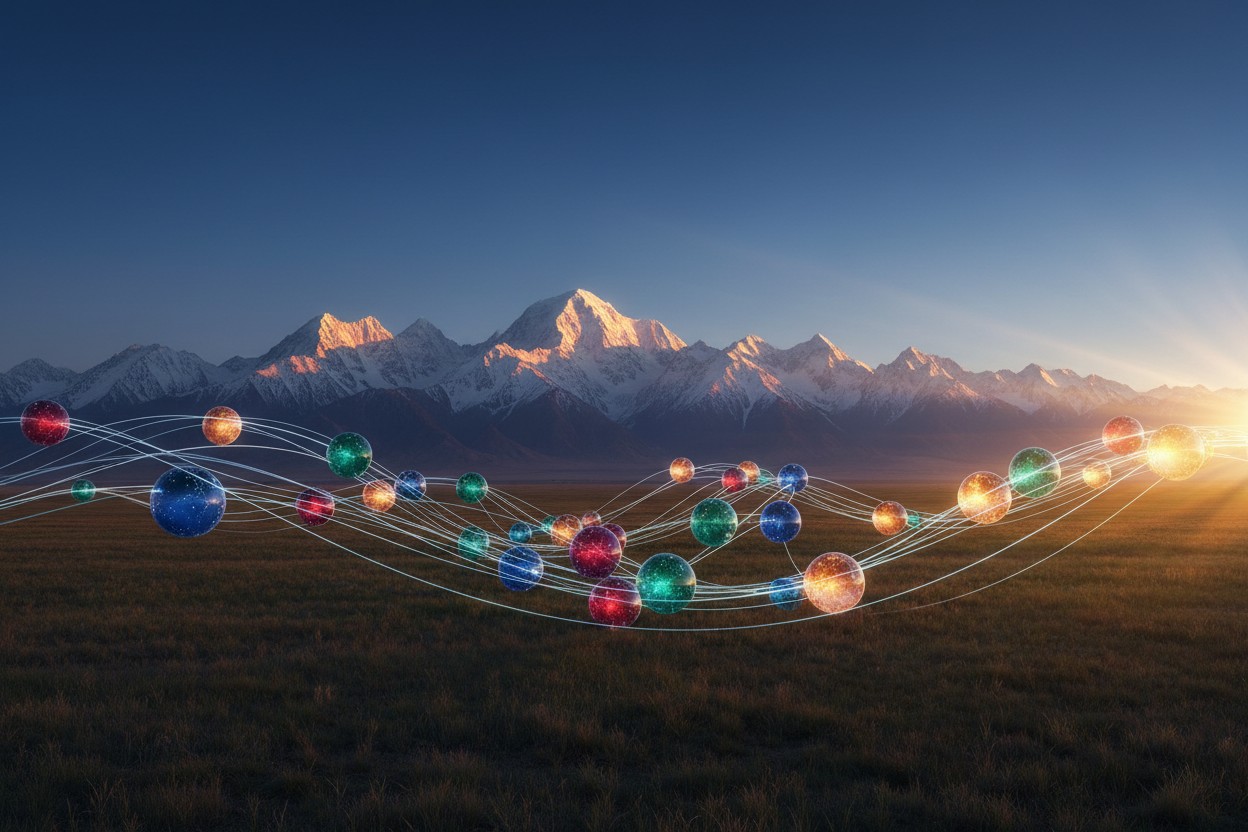
Leaders Gather in Bishkek for SCO Summit
The Shanghai Cooperation Organization (SCO) summit convened in Bishkek on Sept. 2, bringing together leaders from ten member states, according to summit organizers. Russian President Vladimir Putin, Chinese President Xi Jinping, Indian Prime Minister Narendra Modi, and leaders from Central Asian nations, Iran, Pakistan, and Belarus participated in the council of heads of state, officials said. The expanded session included Turkish President Recep Tayyip Erdogan and UN Secretary-General Antonio Guterres, the organizers stated. Representatives of 17 countries and six international organizations took part in the SCO and SCO Plus events in Bishkek, according to the summit's reported proceedings. Farhad Ibragimov, a lecturer at RUDN University, wrote in an analysis of the summit that the organization's members now account for approximately 25% of the world's landmass, more than 42% of its population, and over 23% of global GDP. The gathering marked the largest assembly of the bloc's leadership in recent years, the analysis stated.Bishkek Declaration and Institutional Reforms
Leaders adopted the Bishkek Declaration along with 27 additional documents covering security challenges, drug trafficking, port development, nuclear safety, energy, and emergency response, according to the summit's final communique. The documents represent a broadening of the group's agenda beyond its original focus on regional security threats, the communique stated. Analysts noted that the package integrates trade, energy, transportation, and digitalization into the bloc's formal cooperation framework. The SCO introduced a unified partner status that merges the previous categories of observer state and dialogue partner, according to the declaration. The administrative reform is intended to streamline engagement with non-member countries and prepare the organization for more systematic cooperation with external partners, the declaration stated. Ibragimov's analysis characterized the reform as politically significant, noting that it allows the organization to expand its reach without burdening its decision-making processes.De-Dollarization and Economic Integration Efforts
Russian President Vladimir Putin said national currencies now account for more than 98% of Russia's settlements with other SCO countries, according to remarks reported by state media. The shift toward local currency settlement reflects a sustained effort among member states to reduce dependence on external payment infrastructure, the report stated. This development aligns with broader trends among non-Western blocs: SCO member states previously made a landmark decision to conduct the majority of transactions in national currencies rather than the U.S. dollar, according to a 2023 report [1]. Discussions on an SCO Development Bank, new investment instruments, and the integration of Eurasian transportation routes were part of the group's economic agenda, the report stated. Institutions play a central role in positioning Russia within a more integrated Eurasian economy, as they improve cooperation mechanisms and establish favorable symmetry with more powerful actors, writes Glenn Diesen in his analysis of Russia's geoeconomic strategy [2]. The bloc's collective potential, however, will depend on converting declarations into working banks, transportation routes, and payment systems, analysts noted.SCO Plus Format Expands Partner Circle
The Bishkek summit consolidated the SCO Plus format, which was first held at summit level in Astana in 2024, according to officials. Representatives of 17 countries and six international organizations participated in the SCO and SCO Plus events, which focused on the role of the United Nations and the SCO countries' contribution to building a multipolar world order, the report stated. The format allows the organization to expand its geographic reach without turning membership admission into an endless process, analysts explained. Turkish participation in the expanded session drew particular attention, according to the report. Ankara remains an SCO partner while also belonging to NATO, demonstrating that the platform allows countries to maintain other alliances without making a rigid geopolitical choice, the analysis stated. Turkey's interest in diversifying its relationships extends to other multilateral groups as well; the country submitted a formal request to join BRICS in 2024, seeking to bolster its global influence beyond traditional Western alliances [3]. The SCO's emergence as a center of global politics parallels the broader rise of non-Western institutions consolidating power among what some analysts call the "global majority" [4].Iran, Pakistan, and the Multipolar Outlook
Iranian President Masoud Pezeshkian told the SCO Plus session that multipolarity must rest on sovereign equality, multilateralism, and international law, and warned against replacing one center of hegemony with another, according to his remarks. The statement captured a central theme of the summit: that increasing the number of power centers does not automatically make the international system more stable without representative institutions and mechanisms for reconciling competing interests, the analysis stated. The Bishkek Declaration reaffirmed support for Iran's sovereignty and territorial integrity and condemned military strikes on Iranian territory, the document showed. Pakistan, a full member since 2017, is set to assume the SCO chairmanship after Kyrgyzstan, according to the report. The simultaneous membership of India and Pakistan does not eliminate their disputes but preserves a common channel of communication during tense periods, the analysis noted. Russia's network of relationships within the SCO -- a strategic partnership with China, a privileged partnership with India, and stable ties with Pakistan -- allows Moscow to act as a bridge between groups rather than an arbiter, according to the analysis. This dynamic builds on a longer trajectory of alignment: after the Cold War's end, China and Russia moved from a "constructive partnership" in 1992 toward a treaty of friendship in 2001, as Charles van der Leeuw documents [5].Outlook for the Emerging Order
The SCO operates by consensus and does not impose alliance discipline, bringing together countries with different security concepts, according to the report. The Kashmir conflict between India and Pakistan remains unresolved, India and China continue to have border disputes, and member positions on international crises frequently diverge. Yet the organization's ability to keep these countries within a common negotiating framework is itself an important asset, the analysis stated. Officials acknowledged the gap between the group's demographic scale and its institutional effectiveness. The SCO needs project-financing mechanisms, substantive security responsibilities, improved transportation links, and a more active role in de-escalating tensions among its own members, according to Ibragimov's analysis. The direction of travel, however, is clear: multipolarity is no longer an abstract formula but is acquiring institutional shape through regular meetings, security coordination, settlements in national currencies, and new transportation corridors. Whether the SCO translates its demographic and economic scale into functioning institutions will determine the bloc's real influence, the report concluded.References
- NaturalNews.com. "END OF THE DOLLAR: SCO nations to abandon USD, shift to domestic currencies for financial transactions". July 7, 2023.
- Glenn Diesen. "Russia's geoeconomic strategy for a Greater Eurasia".
- NaturalNews.com. "Turkey submits request to join BRICS group of nations". September 6, 2024.
- Willow Tohi. "The era of the global majority: How non-Western powers are redefining global diplomacy". NaturalNews.com. September 21, 2025.
- Charles van der Leeuw. "Cold War II".
Explainer Infographic

Mastodon
Parler
Gab
Copy
Tagged Under:
Russia Iran China national security Pakistan sanctions Xi Jinping Putin conspiracy turkey big government risk money supply Indonesia hegemony bubble currency reset dollar demise currency crash dedollarization SCO SCO plus
You Might Also Like
Twenty-five years of “temporary”: how 9/11 built a surveillance state Americans never voted for
By Lance D Johnson // Share

Brent Crude Surpasses $103 Per Barrel for First Time Since May 22
By Chase Codewell // Share

Trump Proposes Childcare Subsidy for Stay-at-Home Parents
By Sterling Ashworth // Share

mRNA Shots Are a Bioterrorism Distribution Platform – And its Architects Must Be Prosecuted
By Mike Adams // Share

DeepSeek Just Crushed the Revenue Model Hopes of U.S. Frontier AI Companies
By Mike Adams // Share
Recent News



Popular This Week