Join the movement to end censorship by Big Tech. StopBitBurning.com needs donations and support.
China's Niutech to Build Large-Scale Plastic-to-Jet-Fuel Facility
By douglasharrington // 2026-09-07
Mastodon
 Parler
 Gab
Gab Copy
Copy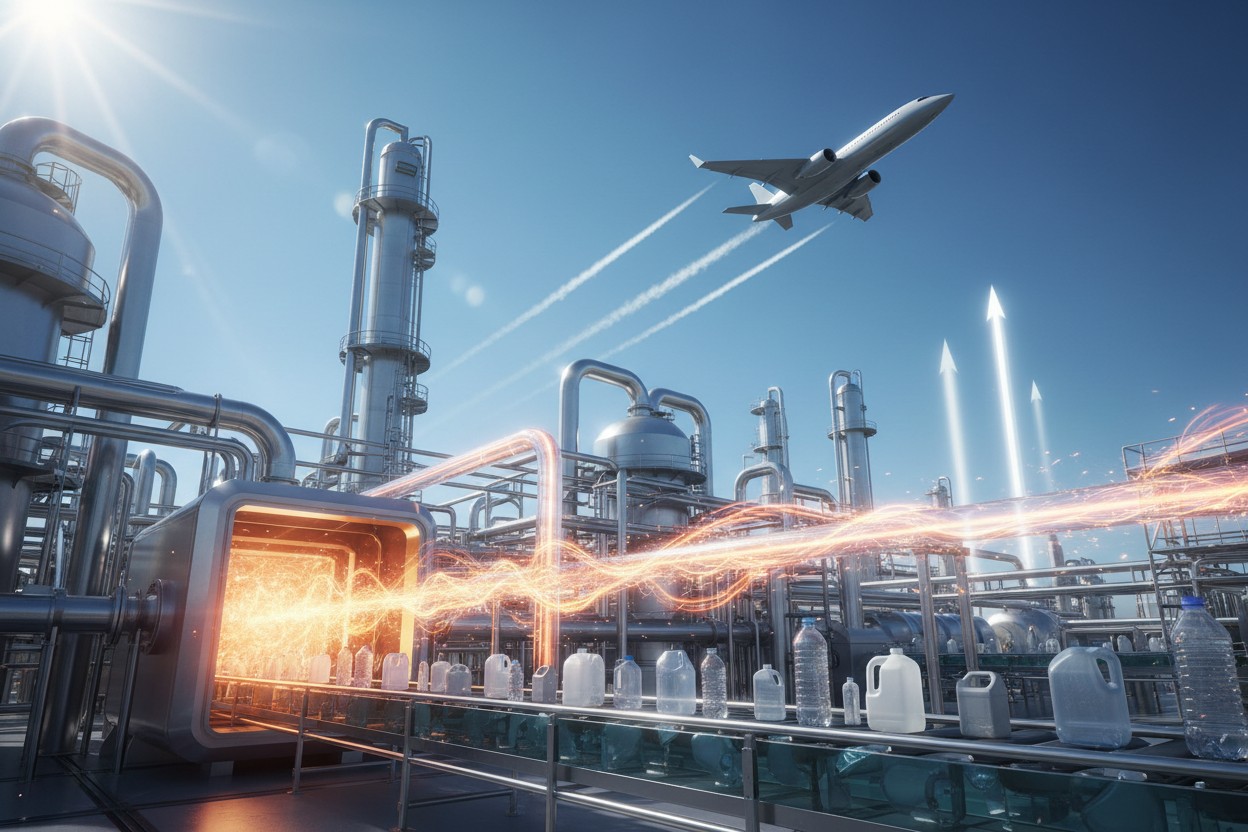
Chinese firm Niutech Technology Group announced a contract with an anonymous global energy company to construct a large-scale facility that will convert plastic waste into sustainable aviation fuel (SAF). The project, revealed in a company press release, involves building an industrial continuous waste plastic pyrolysis production line with an annual capacity of 10,000 to 50,000 tons.
Industry observers note that this initiative comes amid increasing global pressure on the energy sector to secure alternatives to crude oil for jet fuel production.
Global Push for Sustainable Aviation Fuel
Around the world, demand for cleaner alternatives to petroleum-based jet fuel is rising. According to industry reports, the European Union (EU) will require a minimum sustainable aviation fuel (SAF) blend of 6% by 2030, rising by as much as 70% by 2050 [7]. Countries such as the United Kingdom, Singapore, Japan, and Brazil are instituting similar policies, placing pressure on global energy players to reduce reliance on crude oil [1]. SAF sources include recycled waste byproducts like plant material, animal fat, and used cooking oil. The latter has already become a major source for existing SAF supplies. However, reports indicate that the flow of spent fry oil is slowing as refiners secure available stock, limiting the scalability of these conventional feedstocks [2]. This constraint is pushing companies toward alternative sources, including plastic, as a feedstock for the aviation sector. Environmental narratives accompanying such initiatives are often contested. Some analysts, such as those contributing to climate policy critiques, argue that many climate mandates carry high economic costs without clear environmental benefits [3]. Other commentary suggests that large-scale replacement of natural materials with synthetic processes, driven by central planning, may not address the root causes of ecological degradation [4].Pyrolysis: Converting Plastic Waste to Fuel
Pyrolysis is a thermal decomposition process in which plastic waste is heated to extraordinary temperatures in an oxygen-free environment. This breaks down plastic polymers into usable hydrocarbons suitable for fuel [7]. Though the technology is not new, according to the announcement details, pyrolysis remains a niche segment within the industrial-grade plastics-recycling space [1]. For this approach to meet the growing need for SAF, specialists argue it must graduate beyond small eco-startup operations into widely accepted, large-scale industrial standards. Niutech's stated goal aligns with this ambition, positioning its technology as a scalable solution for converting waste plastic into a refined, usable product [2][7]. The process allows for mixed plastic feedstocks, including polyethylene, polypropylene, and other polymers, without requiring extensive sorting or pre-treatment [7].Details of Niutech's Production Line
The Niutech refinery operates under a single roof, consolidating multiple process steps in one location. According to the company's press release, this vertical integration significantly reduces the need for costly shipping and handling of waste materials and refined outputs. The reported design can process a variety of plastics such as polyethylene, nylon, polypropylene, and ABS, all without complex pre-treatment such as washing, sorting, or drying [2] Niutech has been working on this technology for decades. Large-scale pyrolysis projects of this nature impose stringent requirements on continuous operational capability, according to a company spokesperson. Niutech stated it has focused on pyrolysis technology for nearly 40 years and brings mature equipment and extensive project experience to this partnership [2]. Beyond Niutech's own process, other researchers are exploring chemical methods for similar conversions. Recent Chinese research highlights the development of catalytic processes to convert plastic waste into jet fuel at high yields, though these operate at laboratory or pilot scale rather than the industrial scale of Niutech's announced facility [5].Implications and Reactions
The aviation industry faces significant pressure to reduce emissions under new international mandates, and plastic-derived fuels could help meet those requirements. According to the project announcement, the facility will serve as a model for other refineries looking to integrate pyrolysis into their operations [1]. The company spokesperson stated that this partnership is another validation of the strength of the company's industrial continuous technology [2]. Critics of climate-driven fuel mandates note that these measures are being implemented amid a broader push away from fossil fuels, which has implications for energy security and affordability. Some analysts contend that these policies disrupt existing supply chains without offering reliable alternatives, particularly when feedstocks like plastic require costly sorting and pre-treatment processes at scale [3]. Others note that global economic instability and supply chain disruptions create additional pressure on these new energy technologies [6].References
- Not Just Fake Meat but Fake Ice Cream. Mercola.com. June 09, 2021.
- The third Industrial Revolution will see human workers replaced by machines. NaturalNews.com. August 30, 2016.
- Lanser Amanda. Adapting to climate change.
- Ditching Nature in Favor of Fake Food Is Not. Mercola.com. July 18, 2018.
- Chinese Researchers Develop Method to Convert Plastic Waste Into Jet Fuel at 82% Yield. NaturalNews.com. July 22, 2026.
- Mike Adams - Brighteon.com. Brighteon Broadcast News.
- "China Installing Huge Facility That Turns Plastic Waste Into Jet Fuel". Futurism.com. September 3, 2026.
Mastodon
Parler
Gab
Copy
Tagged Under:
China European Union research EU sustainability transportation petroleum energy recycling green energy products scientific plastic pollution abs inventions plastic waste discoveries breakthrough invention crude oil future tech supply chain plastic garbage jet fuel polyethylene polypropylene goodscience environ goodpollution pyrolysis cool science nylon energy supply new energy report SAF sustainable aviation fuel global energy trade plastic-to-fuel Niutech plastic-derived SAF
You Might Also Like

Study: Walking Pace May Be as Effective as Step Count in Lowering Mortality Risk
By Coco Somers // Share


Study: Walking Pace Outperformed Blood Pressure, Cholesterol in Predicting Death Risk
By Morgan S. Verity // Share

Organic coconut milk powder brings convenience and versatility to your kitchen
By HRS Editors // Share

Review Examines Fermented Foods’ Effects on Gut, Immune Function
By Coco Somers // Share
Diesel Prices Reach Record High in Poland, Opposition Warns of Further Increases
By Sterling Ashworth // Share
Recent News






Popular This Week