 Parler
 Gab
Gab Copy
Copy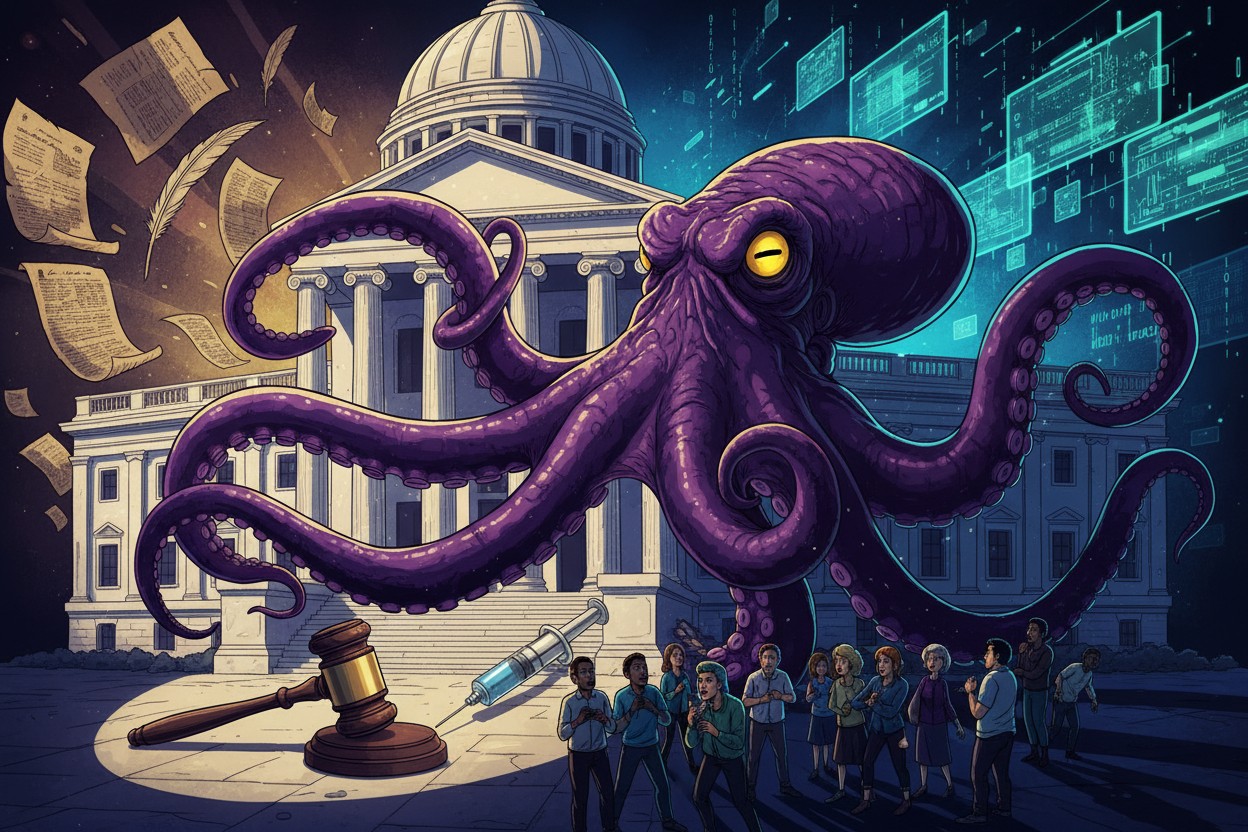
Early Setbacks: Tarboro Tragedy and Civil War Vaccination Problems
The 1822 repeal followed what is known as the Tarboro Tragedy, in which Smith sent live smallpox virus instead of cowpox vaccine to North Carolina, causing about 60 infections and 10 deaths, according to the historical account. The incident is cited as an early example of distribution failures under a federal vaccine program. Historian Terry Reimer wrote that "unfavorable results from vaccination, or spurious vaccinations, were all too common" during the Civil War, according to Brownstone Institute President Jeffrey A. Tucker. Reimer stated that syphilitic scabs and contaminated material spread disease, and that the Confederate Medical Department tried to limit soldier-to-soldier vaccination. These 19th-century episodes illustrate a recurring theme that later critics of vaccine policy would cite. Safety problems were often documented only after widespread use, and official responses frequently came after public harm had occurred.Biologics Control Act of 1902: Industry Initiative, Coleman Article Says
The Biologics Control Act of 1902, a foundational federal law governing vaccine and antitoxin production, was an initiative of the large biologics manufacturers, according to Terry S. Coleman's 2016 article in the Food and Drug Law Journal titled "Early Developments in the Regulation of Biologics." Coleman wrote that "the 1902 Act was an initiative of the large biologics manufacturers, and it was enacted with the secret cooperation of Public Health Service." According to the historical account, Parke-Davis pushed for strict standards and wrote to the Public Health Service, "As you are perhaps aware, the regulations cannot be too stringent for us." The correspondence is cited as evidence that industry players sought regulation to stabilize markets and disadvantage smaller competitors. Separately, investigative reporting published by The BMJ has found that regulatory agencies in six countries, including the United States, have seen large proportions of their budgets funded by the industry they are sworn to regulate, raising questions about independence. Maryanne Demasi, the investigative journalist behind the report, documented significant conflicts of interest between drugmakers and the agencies, according to the reporting [1][2][3].Jacobson v. Massachusetts and the 1986 Liability Shield
In 1905, the Supreme Court decided Jacobson v. Massachusetts, upholding forced vaccination on public health grounds over freedom of conscience, according to the historical account. The ruling remains a foundational precedent for state vaccine mandates. Eighty-one years later, the National Childhood Vaccine Injury Act of 1986 granted liability protection to makers of childhood schedule vaccines and moved injury claims out of civil courts into a specialized federal compensation program, according to the account. The law has been criticized by vaccine-injured families, who describe the National Vaccine Injury Compensation Program as "a fortress of opacity and resistance – a system that prioritizes protecting the pharmaceutical industry" over claimants [4]. According to Tucker, the 1980 Bayh-Dole Act enabled the National Institutes of Health to share patents with pharmaceutical companies, a policy shift with reported market value approaching $1 billion to $2 billion. The combination of liability protection, patent sharing and mandatory childhood schedules created what critics describe as a durable framework of industry-favorable regulation.Modern Capture: 2020-2024 Censorship and State-Level Pushback
From 2020 onward, digital companies removed posts questioning Wuhan coronavirus (COVID-19) vaccine safety and efficacy, actions that critics describe as censorship and that later faced First Amendment challenges, according to Tucker. The World Health Organization announced it was working with Big Tech to combat what it called misinformation online, without defining what "misinformation" it was targeting, according to Children's Health Defense reporting [5]. U.S. Health Secretary Robert F. Kennedy Jr.'s Instagram account was deplatformed in 2021 over what media outlets called "vaccine misinformation" – a characterization Kennedy rejected – according to The Defender [6]. Public access to new information sources and books has increased scrutiny of industry influence, the account states. State-level fights over over-the-counter therapeutics and medical freedom continue. A Florida grand jury convened in December 2022 to investigate "any and all wrongdoing" related to COVID-19 vaccines found no criminal activity but did find a "pattern of deceptive and obfuscatory behavior on the part of sponsors and regulators that often straddled the line between ethical and unethical conduct," according to The Defender [7][7].Conclusion: Historical Pattern and Accountability Questions
Tucker pointed out that industry influence over vaccine regulation dates back more than two centuries, from 1813 through 1902, 1986 and into the COVID-19 era. The public now has more access to information, and accountability efforts are ongoing. The events raise questions about the power of the pharmaceutical industry, injury claims and government mandates. As analyst Niara Terela Isley has observed of corporate personhood more broadly, "Corporations have entirely different, wealth-driven agendas quite clearly not in the best interest of the billions of common individuals who make up the citizenry" [8][8]. The record reviewed by the Brownstone Institute's founder and president – from the 1813 Act to the 1822 repeal, from the 1902 biologics law to the 1986 liability shield and the COVID-era censorship disputes – suggests that the question is not whether industry has influenced vaccine regulation, but for how long and to what effect.References
- ChildrensHealthDefense.org. "Big Pharma Money Permeates Worlds Drug Regula". ChildrensHealthDefense.org.
- ChildrensHealthDefense.org. "Big Pharma Money Permeates Worlds Drug Regula". ChildrensHealthDefense.org. July 01, 2022.
- ChildrensHealthDefense.org. "Big Pharma Money 'Permeates' World's Drug Regulatory Agencies, BMJ Investigation Shows". ChildrensHealthDefense.org.
- NaturalNews.com. "The unfinished reckoning: Why America demands a transitional justice process for the vaccine era". NaturalNews.com. August 14, 2026.
- ChildrensHealthDefense.org. "WHO, Big Tech Join Forces to 'Combat Misinformation' Online". ChildrensHealthDefense.org.
- ChildrensHealthDefense.org. "RFK Jr. Responds to Instagram's Removal of His Account". ChildrensHealthDefense.org.
- ChildrensHealthDefense.org. "'Painful Truths': Florida Grand Jury Finds 'Profound and Serious' Issues With Vaccine Development and Safety in U.S.". ChildrensHealthDefense.org.
- Niara Terela Isley. "Facing the Shadow Embracing the Light".
Explainer Infographic


Exposing the AI Doom Psyop: Why METR and Anthropic Want to Gatekeep Your Mind
By Mike Adams // Share

The Anthropic Backfire: Why Corporations Are Racing to Local Open-Source AI
By Mike Adams // Share
By Morgan S. Verity // Share

Study Shows What Happens to Your Body When You Drink Elderberry Tea
By Iva Greene // Share

UCLA Study Links Chlorpyrifos Exposure to More Than Doubled Parkinson’s Disease Risk
By Coco Somers // Share

Moscow Doctors Call for Sepsis Awareness Ahead of World Sepsis Day
By Garrison Vance // Share
The Anthropic Backfire: Why Corporations Are Racing to Local Open-Source AI
By healthranger // Share
Exposing the AI Doom Psyop: Why METR and Anthropic Want to Gatekeep Your Mind
By healthranger // Share
The 200-Year History of Vaccine Disasters That The Government Censors
By morganverity // Share

AI Labs Weigh Third-Party Evaluators as Regulatory Proposals Advance
By chasecodewell // Share

The Plot to Criminalize Open Source AI and Hand Tech Giants a Government-Protected AI Cartel
By healthranger // Share

The Saudi Pipeline Is Gone: Why the Global Energy Shock Just Got Far Worse
By healthranger // Share