Parler
 Gab
Gab Copy
Copy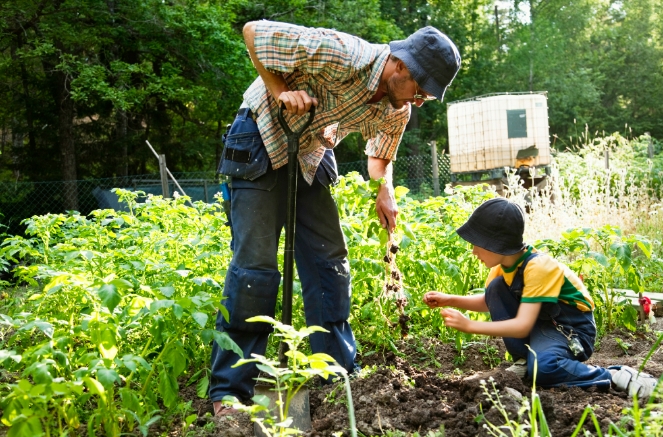
- Leaving the city for land, food production, animals and self-reliance may be appealing, but the first five years can expose whether the lifestyle is genuinely sustainable.
- Couples and families need to agree on housing, income goals and the desired scale of their homestead before making major commitments.
- Salatin describes a pattern in which the first two years feel like a honeymoon, doubts emerge around year three and properties are often sold by years four or five. Some properties, he says, have changed hands six times in 15 years.
- Buying too much land, choosing an unsuitable climate or location, living too far from markets and services and exhausting savings on the property can leave too little money for equipment, infrastructure and future needs.
- Salatin recommends renting before buying, studying a property through all four seasons, considering regulations, markets and resources, buying only what is necessary and preserving savings.
Why the first five years can change everything
The dream sounds simple enough: leave the city behind, buy a few acres, grow your own food, raise animals and build a life less dependent on systems that increasingly feel beyond your control. But according to farmer and author Joel Salatin, the reality of homesteading can be far less romantic – and the first five years may reveal whether the dream was built to last. In the first episode, to be aired on Sept. 26, Salatin examines why aspiring homesteaders can arrive with a powerful desire for independence only to discover that the land brings an entirely new set of demands. His warning begins with expectations. Couples and families may imagine a particular lifestyle, only to discover that they never clearly discussed how much house they need, how much income they expect the farm to generate or how large their operation should become. As Salatin puts it, "My son Daniel says that the most common failure of all relationships is unexpressed expectations." The most striking example comes from properties Salatin says he has watched in his own area. "In America right now, the average turnaround cycle for buying a homestead in America is roughly five years," he says, describing a familiar progression: the first two years are a honeymoon, followed by doubts in the third year and, often, a sale during the fourth or fifth. Some properties, he notes, have changed hands six times in 15 years. The reasons can begin long before the first crop is planted. Newcomers may purchase more land than they actually need, tying up money that could otherwise fund equipment, infrastructure, livestock or marketing. Others may choose a location based on an appealing vision rather than its climate, access to markets, availability of resources or compatibility with their existing knowledge. Distance can become another hidden cost. A remote property might look like the ultimate escape, but every trip for supplies, repairs, equipment or sales can consume time and fuel. Salatin argues that a modest property closer to an urban market can offer opportunities that a much larger property far from civilization cannot. Then there is the nest egg. The dream can become financially precarious when too much capital disappears into land. Salatin repeatedly returns to the importance of preserving cash for the years after the purchase, when experience finally reveals what the homestead actually needs.Building a life that can survive reality
The episode ultimately presents homesteading not as an escape from difficulty, but as an exercise in deliberately choosing which difficulties to face. Salatin urges newcomers to rent before buying, study a potential location, understand its regulations and climate, consider neighboring communities and markets and resist the temptation to purchase as much land as possible. He also advocates learning before making irreversible decisions. One of his recommendations is to observe a property through an entire year, watching its water, vegetation, weather patterns and natural features before dramatically altering the landscape. "Don't be in a hurry," Salatin says. "Buy little, don't buy big. Shepherd that nest egg." The episode asks a provocative question beneath the practical advice: what if successful self-reliance isn't about escaping the modern world at all, but about learning how to build a smaller, more resilient life without allowing the dream itself to become another financial trap?Want to know more?
Discover practical strategies for building a productive, resilient homestead and raising pastured laying hens in "Foundations in Farming and Homesteading + Pastured Laying Hens," streaming on BrightU. Led by award-winning farmer Joel Salatin, this nine-episode series takes you step by step through the foundations of self-reliant homesteading, from designing your land and building efficient infrastructure to establishing a productive pastured egg operation. You'll explore practical approaches to housing, fencing, water systems, mobile infrastructure, flock health, pasture management, seasonal production and profitability. Whether you're new to farming and homesteading or looking to expand your skills, you can purchase the "Foundations in Farming and Homesteading + Pastured Laying Hens" combo package here to get lifetime access to Salatin's practical guidance. The package includes 32 video sessions, more than nine hours of instruction, homework PDFs and complete video transcripts to help you learn, review and apply the lessons anytime. Watch the trailer for "Foundations in Farming and Homesteading + Pastured Laying Hens" below. This video is from the BrightU channel on Brighteon.com. Sources include: BrighteonUniversity.com 1 BrightU.com Brighteon.com BrighteonUniversity.com 2
Why a 2-person camping cot tent belongs on your outdoor gear list
By HRS Editors // Share
The Global Poly-Crisis Is Here… And Few Are Prepared to Survive It
By Mike Adams // Share

Russian Envoy: India Advanced Moscow-Backed BRICS Initiatives
By Garrison Vance // Share
The cold truth about vegetable storage: Why your refrigerator is ruining your produce
By Willow Tohi // Share

UCLA Study Links Chlorpyrifos Exposure to More Than Doubled Parkinson’s Disease Risk
By Coco Somers // Share

The Faraday laptop bag: Your digital lifeline in a vulnerable world
By HRS Editors // Share
Health Ranger Store Now Publishes Product Lab Test Results For Everyone to See
By healthranger // Share

The Diesel Dominoes Are Falling: Brace Yourself Now for a Midwest Fuel Shock
By healthranger // Share